
Transcript: EDI Pedagogy Interview with Ellen Scott
Interviewed by Jasmine Nadua Trice, 2025
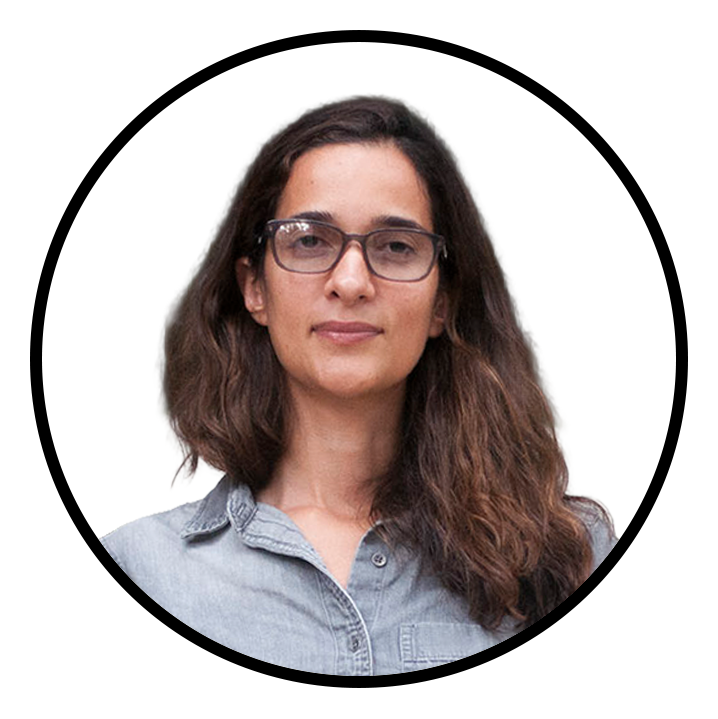
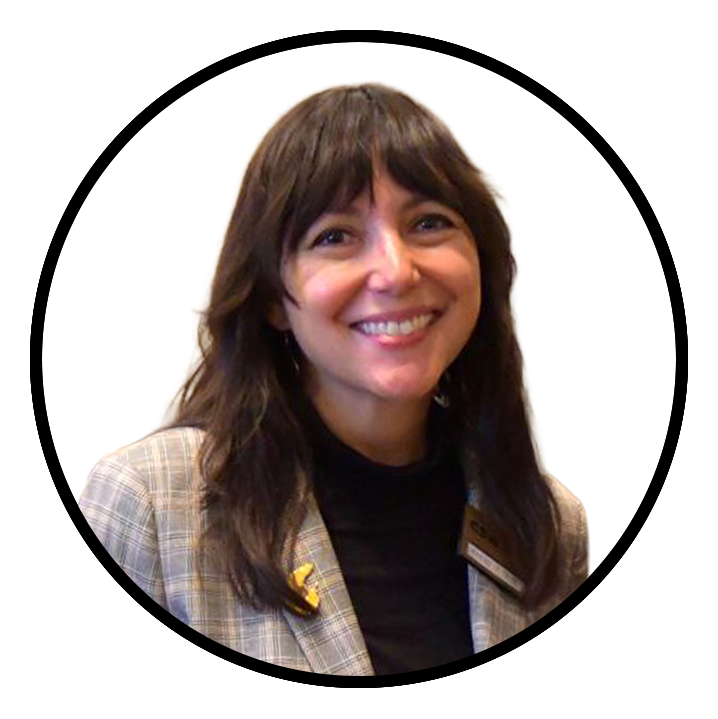
Professor Jasmine Nadua Trice (Interviewer)
Professor Ellen Scott
Jasmine: Thanks so much for being here, Ellen. So I’m really excited today to be speaking with Professor Ellen Scott, who is Associate Professor of Cinema and Media Studies in the Department of Film, Television, and Digital Media here at UCLA. And she’s also the author of a book called Cinema Civil Rights, which was published through Rutgers University Press. And she’s done a lot of really, really fundamental sort of work in American film history and sort of expanding the canon of U.S. film history in really important ways through collaborations, for example, with the Academy Museum and other spaces.
So, we’re really excited to have you here, and thank you for being so generous and sharing your expertise as it relates to sort of pedagogy in the classroom.
Ellen: Awesome! Thank you so much. It’s good to be here.
Jasmine: Yeah. So I thought I could begin with sort of a general teaching philosophy, and I was thinking especially about American Film History, which is a large undergraduate class. I think it’s like 250 students, 220, something like that. And sort of how you approached teaching that course, which is taken by a lot of undergraduates across the campus.
Ellen: Yeah, no, that course has so much potential to say so much about America and its film history about the development of the discourse of the cinema in the United States, and the ways that different cultural groups picked up cinema at different moments, and it became meaningful to them. So, that was part of the way that I entered into redesigning the course, which I think had traditionally been taught as pretty much a history of Hollywood, so a big part of it was trying to think through, you know, which groups had cinema activated for them at different moments, and in what ways were they taking it up in conversation with their own backgrounds and identities, cultural practices and traditions. And then you know really thinking through the film movements in the United States that competed in some ways with the film industry in terms of providing a different infrastructure and a different set of production practices for various groups to take up.
And so, a lot of it was really about trying to find those moments, which aren’t always strictly recorded in textbooks, but can be found more in books aimed at graduate students or professors. And also just seeking to build a different narrative that really did not center the industry, which was really controlled in some ways by a desire from the very foundations for just total financial control of a few individuals over film. So, in some ways I understand but do not agree with the mutual decision of 1915, which called film a business pure and simple, and did not protect it under the First Amendment. And so, in some ways, I think knowing that you can sort of see how the business practices that were involved in the first kind of decade of cinema led folks to consider it that way, because in some sense the financial interest overwhelmed the creative side. I mean, there was still a creative side, but it was very much about this profit motive.
Jasmine: That’s really fascinating, and stuff that I don’t think would be familiar for a lot of students, you know? Who have probably a very basic sort of understanding of film history and mostly probably oriented around Hollywood history because that’s what’s most visible. So, you’re really sort of thinking about a range of production practices, a range of films. How did you go about selecting which films would be, you know, most helpful for your syllabus for like an undergrad, like a broad class, where students maybe haven’t ever taken a film class before?
Ellen: Part of it is about where there is historiographic work being done where histories actually exist and have been written up by academics, you know, because I want the students to have also a scholarly perspective on all of this. So part of it was that. Who do we know about? Who is written about? Who has modeled writing about a particular set of filmmakers?
I guess one interesting example was James Young Deer, who was an early filmmaker hired by [the French film company] Pathé to run the West Coast branch, who actually ended up really pioneering a new kind of format in terms of the Western film that centered Indigenous people. He was an Indigenous filmmaker who worked for Pathé and a number of other companies in the aughts and then into the teens. However, there was also the question of his background in terms of being caught up in the star scandals and actually becoming, you know, a figure who was known to have done bad things to women. So, a big question came up: Should I present this figure? You know, where are we now? What can we say? And I think for me, it was a big issue of, you know, one thing is that the scholarship is really specific about the fact that he was partnering with his wife in a lot of these film productions. So, it was possible to talk about this in terms of a narrative that was about both a woman filmmaker and a male filmmaker. And, it was also possible to really tell students that this was the context for a lot of what happened.
I think those kinds of decisions became difficult throughout the course of deciding, but again, you know, I think you’re always looking for films that teach people something about a particular moment in filmmaking and in American culture. So, that’s maybe the long and short of really how I made those decisions is looking for those moments, those really illuminating moments where it’s a beautiful, interesting film that tells us something about a moment that maybe comes from a voice in Hollywood or maybe does not.
Jasmine: Right, right. So his films exist?
Ellen: Some of his films exist.
Jasmine: Nice.
Ellen: Yeah, and there’s also a lot of really interesting history on him that actually a UCLA American Indian Studies scholar has done — Angela Aleiss. [James Young Deer’s] is a fascinating story because he was also a transnational filmmaker who went abroad to London after the star scandals, and then came back and produced films in the United States under his own production company.
Jasmine: Right.
Ellen: So, it’s like one of those stories that really I think points to the dynamic nature of what actually exists in the history if we go to look for it. And should be a part of the textbooks that cover American film history, but for some reason it’s not covered. And so it’s good to, I think, bring in those stories, even if they don’t exist in full length books. Sometimes just bringing in things that are in articles.
Jasmine: Yeah, like journal articles. How did the students respond to, you know, his work being shared, or I should say their work, because it sounds like it was collaborative with his spouse?
Ellen: Yeah, Joanna Hearne writes about the fact that it’s a collaborative venture with his spouse, Lily Saint Cyr. So, yeah, I mean, I think students were really receptive to learning about a history that they had never heard about, that was actually very contiguous to the narrative of Hollywood’s rise and growth, but that was coming from a perspective that wasn’t the dominant perspective. I think because we’re such an amazingly diverse student body, students are waiting and looking because they know that this history exists. So, they’re just waiting for someone to actually talk about it, and to bring it forward. My impression is that students have really appreciated that throughout the course.
You know, bringing in filmmakers like Zora Neale Hurston, who’s working well outside of an industry context, but does give us a vision of Black life and a way to look at— hmm, how do I want to put this? It’s kind of a more intimate vision because it’s ethnographic filmmaking, but she’s not doing it just as ethnographers typically did it. She’s doing it through intense conversations and dialogs with folks. It is not a staid, you know, sort of “I’m out of the picture” approach. So, it also introduces students to many different styles of film engagement that are a part of how we should understand this history. You know, because the ultimate goal of a course like American Film History isn’t just to talk about profit; it’s to talk about all the modes of production that make up this complex past,
Jasmine: Right, right. So maybe we could talk a little bit about assessments and how you work with assignments and things like that in a large class like this.
Ellen: I try to distribute the assessments across different learning styles and approaches, and I try not to weight any one assessment too high. If I find that students aren’t doing well or that they’ve struggled somewhere, I do give extra credit opportunities that allow them to look at things from a slightly different perspective. Like if I find in the course of designing a course, the first time I’m teaching it, oh, it looks like these assessments were difficult for students in a set of ways, maybe there were too many in one category of learning style and not enough in another. Then I sometimes will decide, okay, here’s an extra credit assignment that lets them practice other skills, but that also connects them to the material.
So, what I have currently is they do a weekly journal on their films and readings. They have a midterm quiz, which gives a sense of what the final might look like. They start to get a sense of how I grade and what we’re looking for and what are the central concepts. And you know, part of the motivation too is that once they’ve learned that they know something, they engage differently with the material. Once they’ve had a chance to prove it and they’ve had some real serious assessment. I think that’s kind of the design and mold there. But you’re seeing that it privileges people who have skill with in-class timed assessments. You know, obviously working with CAE [the Center for Accessible Education at UCLA] so that extra time can be given for any student that can’t work within those time frames. But it also gives time for people who will do you know do better on an essay type assignment, where they’re allowed a longer time to you know to process the material and think about it.
Jasmine: It’s really interesting what you said about how, you know, having something like a midterm quiz — and I like that you call it “quiz,” which I think is less anxiety-inducing than like “exam.” And also the fact that you know it’s not necessarily like high stakes in terms of the percentage I think makes a huge difference, even if it is substantive, you know? But it was interesting to me that you said that, like, once they’ve proven through this assessment that they know the stuff, then their engagement with it shifts a little bit. Do you find that they’re more talkative?
Ellen: Yes, yes.
Jasmine: Oh, fascinating.
Ellen: Yeah, it’s been really interesting to see the people who open up once they have something on paper. They’ve kind of met and made eye contact with you in the hall after administering the exam. It’s a different level of contact, so I think that really helps with some of these exams. Yeah, with the class overall, for them to get more comfortable with the material and feel like they’re experts in a certain way.
Jasmine: Right. Yeah. I mean, it’s interesting because what I’m hearing from you is sort of similar to what Michelle Carriger had said about having different sort of styles of assessment. And I don’t know that she had extra credit built in, but she did talk about specs grading, which I think works from similar sort of premises about different learning styles that students have. And so I love the idea that you have, you know, the kind of set assessments, but then you also have these opportunities for extra credit if students maybe aren’t as good at particular things, like you said, like timed assignments or things like that.
Ellen: Yeah, no, I mean, the two extra credit assignments I gave were opportunities for them to go to a film event in the city, sit down, engage in a different way. One of them was a conversation that I was holding, but it was a much smaller conversation. And there, they got to really interact in a different way and to deal with someone who’s a professional in the field. It was Liza Black who came in to talk about Native American representation. She was talking about Reservation Dogs and a short film called A Red Girls’s Reasoning. And so, they were also actually taken to a different context to think about the relationship between film and television, and I think it was really productive for the students who are able to come out because they got this one-on-one, close conversation that they don’t get out of the normal class.
Jasmine: Yeah.
Ellen: So, it’s another mode of engagement to be in a different space and to start to carry that knowledge that you’ve taken from the class into a new space. And I think it really does help to keep it out of that [trails off]... there’s like a pressure always for everything to be very transactional. Now, in university teaching, it’s like okay, I’ve done this, so I get this. But to break that framework and to let them be in other spaces and allow them to engage in other ways and then work on an assessment around that is good because ultimately the goal is learning rather than assessment for assessment’s sake.
Jasmine: Totally, yeah, yeah. I love that idea that you know it is this different learning environment too. If you know you’re in the Bridges Theater, which is huge, 200 plus people, versus something in the [Darren Star Theater] where it’s like, you know, a small percentage of that, like 50 people. That makes a big difference as well.
Maybe we could talk a little bit about graduate classes because I know you teach small seminars quite often. And you know our seminars in TFT are a little different from a lot of graduate schools in that students come in with different sort of goals within their programs like professional goals. We have filmmakers, we have people who are on the PhD track, we have MAs who are sort of wanting to finish after an MA. So, maybe you could talk a little bit about some of the ways you’ve approached graduate education as well?
Ellen: Yeah, I mean, to me, it’s much more. It’s always been a more tailored proposition to who’s in the class, so you sort of have your general syllabus and you know what you’re covering, but then who’s in the room determines a lot of how you cover that and how you sort of expand or contract on various topics.
So…I’m trying to think of a good example. I teach Black Women Media Makers of the Diaspora, which because it has like “makers” or ‘filmmakers” in the title, I often draw a lot of production students to the class. And so, that’s been a place where it’s been really interesting actually because I came in really wanting that course to have an assessment that was basically an outward-facing web page or some sort of outward-facing presentation. And so I had some students who sort of made films that they posted on their page, and other students who published essentially like a paper there, just a traditional paper. And then I had some students who did a hybrid and really kind of brought different things to bear. But the idea was that they’re thinking about how to present this to the public. That’s been an interesting assessment because it actually puts makers in a somewhat advantageous position, and also has people who work more on the study side really thinking about public history, public presentations of historical material, and what you need to do to engage that in a way that doesn’t compromise on rigor.
Jasmine: Right.
Ellen: So, I feel like that course has been an interesting one in terms of both the assessment aspect and then thinking about graduate teaching and kind of bringing everyone into the same conversation. But it really does depend on the class. That’s one class when I’m teaching something like the capstone, which is tailored to MA students and PhD students as their final assessment as they move from their master’s to PhD or to the work world. It really is an individually tailored class where each student has different goals, and I’m working with them to achieve them, to connect them to people that can help them achieve those goals. So, it feels good in that class to do more of a concierge approach, you know?
Jasmine: Right.
Ellen: They do develop a paper at the end of the class or develop a project that they’ve started in a class but want to put finishing or polishing touches on for their capstone. So, all of that is, I think, much more tailored work. There isn’t as much transmission of new material, but I do try to give them a sense, especially if they’re moving towards the PhD, of like the process of vetting papers that happens within academic writing, so that’s one layer. And then sort of what would you need to do if you want to be a film reviewer after this?
Jasmine: Right.
Ellen: You know, how do you make contact in the right places? I’ve had the great experience of using folks like Stephen Farber, who’s taught our film criticism class in the past for CMS to sort of work with some of these critics and to talk to them and I have the students do a bunch of interviews as well so it’s really different pedagogy based on the topics, I guess is what I would say. But I think that that can be really useful when you’re approaching a broad swath of students, you know, to have different modes of approach ready and to be ready to tailor things.
Jasmine: So, I really enjoy hearing about the kind of, like you said, concierge service, the kind of care that you bring in to working with graduate students. You know, from a range of different sort of professional orientations. Do you solicit sort of their information before the class begins or at the beginning of class? How do you sort of logistically manage that?
Ellen: Yeah, a lot of it is in the first day or so of class. We really do like a more intense sharing out about goals and you know life goals in some cases goals for the course in others depending on what class it is sometimes a little bit of both. We definitely begin with community agreements so we intend some things for one another and for the space, including kind of ethical behavior with one another, but also kind of centering mutual learning– that we’re learning in a collective setting for a reason, right? That we’re going to be sharing things, that we’re going to listen to one another, we’re going to ask questions like, W.A.I.T: Why Am I Talking? You know, if we take up a lot of space, we keep that question in mind, but we also make sure that you know if we’re more reticent, that we’re ready to share. Like, how can we make it a space where people who are more reticent are ready to talk?
So, all of those things, I think, really help. I mean, I found community agreements more than anything else to be a super useful tool because you’re not assuming that all of your rules go as professor in the class, but that there’s some give and take to the format the class takes, to the way that we’re going to engage, and I’ve learned things in you know from those discussions where students have told me this is how it feels as a trans student to you know experience being called a “dead name”. I mean, not necessarily by error, but by the community agreements where people can say this has happened to me in the past, and I want these things in place so that I’m in a safe environment, and that’s been enormously helpful in grad classes. I also use them in the undergrad class, and I say if you’re taking the class, you’re signing on to the set of principles, and if anyone has anything they want to add, please contact me, and I’m happy to add it, and we can discuss it. And it’s been a really open space. No one so far has added anything that’s destructive or, you know, that we really had to discuss in depth. But I think it’s a good way of signaling an attention to who’s actually in the room and a desire to hear from all of those who are actually present.
Jasmine: Yeah, so it sounds like a lot of the work that you’re doing in the classroom really begins on sort of setting the tone and building the environment, the learning environment, on the first day, sort of collaboratively with [the group of] students that’s there. So learning about their professional goals, their interests, their intellectual and creative commitments, thinking about how maybe some of your connections in LA can sort of facilitate those. And, then also sort of inviting them to think about, you know, what their needs are…or what their goals are in terms of the learning space.
Ellen: Mm-hmm.
Jasmine: And I like the way that you talked about that is that you know you’re working there collaboratively for a reason. Like, they could be doing this you know on their own by reading, but there’s something that’s activated by coming together. And so, how can we build a space that will be most conducive to working together?
Ellen: Yeah, yeah. And I find that like just figuring out, you know, what are triggers or difficulties for individual people…. I mean, part of inviting everyone to add something to the community agreement is opening it up for them to begin to think about what has been a problem for me in classes before. When have I felt alienated? When have I felt like I’m not a part of this discussion? When have I felt like people are dealing with insider knowledge that has left me out? So, the list I have of agreements is something that’s based on what students have said in the past, as well as what I initially put forward for this, and I think it’s a growing document that I take from class to class.
And so far, it’s been a really useful tool, and I think does change the nature of the exchange, if only because there’s not a presumption that just read the syllabus and you know everything, and just don’t bother me with any of your questions or any of what you need. And so I think it also opens up space to discover access needs that might not be specifically through a CAE type office, but are specific things that individuals really need to feel safe and productive, and that’s what we really want.
Jasmine: And I like that you’re taking a kind of broad approach to access needs because, you know, that can be something that’s like a registered CAE sort of need, but it can also be things like, you know, the class is really close to when I have to go pick up my kids or something like that. That can also be a kind of access need. Yeah. Or you know, I have intermittent back pain, I might need to get up every now and then. That’s not necessarily something that’s going to be registered at CAE, but it does inform the learning environment and, you know, the different kinds of people that are coming together to, you know, learn collaboratively.
Ellen: Yeah, yeah, exactly. And I think it was someone from Sins Invalid, which is a group I really recommend folks to look up, but one of our workshop leaders from there mentioned that you know we all have access needs, but if you don’t think you have them, it’s because they’re being met.
Jasmine: Yeah.
Ellen: And so the idea is just being able to identify when they’re not being met, so that you can get the most out of the time when you’re in the classroom, because there are sometimes barriers we don’t even know about.
Jasmine: Absolutely. And you know, I think some of the job of being a really good instructor, teacher, is sort of trying your best. I mean, obviously we’re all going to fail at some point, but just trying your best to really minimize those barriers, create as little friction as possible for the students, so that they can get the most out of their education and that experience.
Ellen: And I think it’s important to clarify that no friction doesn’t mean there’s never any conflict in the class—
Jasmine: Of course, yeah.
Ellen: —or that they’re not dealing with challenging issues. But that they don’t have to deal with, you know, I don’t know if it’s the ticking clock that’s causing some kind of issue in the room, or something with the lighting, or you know, as you were saying, back pain, or those kinds of things. If we can begin to establish what it means for everyone to be safe and comfortable in that space so that they can get to the work of difficult question asking and answering, then I think we’ve moved to a different level.
But I mean, a lot of what I’ve learned and done, I’ve learned from you because you’re such an excellent professor yourself in terms of using the internet to bring things up. When you know students are, you know, learning about something, if they mention something, you bring it up on the internet, and people can see suddenly. And so there’s a visual learning element. So, I just think I hope you’re going to interview yourself at some point for this because you have a lot to share and a lot of people have learned from what you’re doing.
[Both laugh]
Jasmine: Well, I really appreciate that, Ellen. But yeah…actually, I’ve been thinking about this about myself and how I learn and take in information, and I’m not the best audio processor. So yeah, I need to look more into this, but I feel like there’s a delay or something like this, and so part of my bringing up images or things like this when students mention it is that, for me, it helps to sort of link me into the conversation in a way that allows my brain to kind of process that information more easily.
Ellen: I think that’s a great example, actually, of the ways that, as instructors, we can think about what’s blocking us, you know? What makes it difficult for us in those spaces? What has made it difficult historically? And then start to apply that principle to even those who have much less power and are, you know, our students, and who we want to instruct and move [forward], of course. But how can we work with them to get the best, so that they’re doing the best work they can do and feeling good about it, too. Confident in it.
Jasmine: Yeah, yeah. So, maybe we could just talk a little bit about any kinds of challenges that you’ve encountered. I mean, it seems like the type of work that you’re doing–that’s you know bringing to light maybe stories that have been less told. That the student body at UCLA, you know, it’s a really dynamic and diverse student body from lots of different backgrounds, and so it sounds like they’re really hungry for that type of work and that type of curricular engagement. But I’m curious if you’ve faced any sort of challenges that might be useful for people when they’re thinking about their own sort of pedagogical practices and how you’ve sort of tried to work through things.
Ellen: It’s so hard to include everything. [Laughs]
Jasmine: Yeah.
Ellen: You know, and to feel like, which I think if I were the student who like my group was not represented or like people I identify with were not represented, how would that feel? And I guess that came from you know, I started my career at Queens College, which is in Queens, which is one of the most diverse places on the planet. And so, my classes had students from literally every walk of life, and so as I was teaching Race and Ethnicity in American Media, and I remember thinking, how am I ever going to do this in a way that everyone will be represented? I only have 15 weeks, and here [at UCLA] we have 10.
So, I think that push has been difficult with the class. How do I actually make sure everyone is represented? And I think you know the course is growing, but you know the assignment structure could shift so that people have a chance to really reflect on representations of their own group or groups that they identify with within American film history. But currently I don’t have an outlet for that within the current class structure, but that could even be an interesting additional assignment or an extra credit assignment of some sort that people could pursue in the future. But I think that’s been maybe the biggest challenge with a class like that.
I mean, other challenges involve people who are resistant to hearing about multiple perspectives or prefer to have one dominant perspective that’s been the traditional way as a way of moving forward. And I just want to clarify: I’m not against the film industry or anything like that. I’m just trying to broaden it out so that we’re getting more perspectives on what represents American film history. And I spend a lot of time, especially looking at institutions in classical Hollywood, like the Production Code Administration that worked across studios to kind of create a certain image, and taught the studios how to represent things like sexuality and violence in periods where they were under a lot of outside pressure to keep those representations off screen. So…how did organizations like this teach Hollywood to actually make films differently? So, it is a big part of the class, but I do think it’s very important to hear a range of perspectives. And sometimes, you know, again, people aren’t open to that, and so I’ve fielded some questions in the past from students asking why there’s so many black people or Asian people or Latinos on the syllabus.
You know, [asking] aren’t the real auteurs really a different group? You know, the dominant group, white men primarily. And yeah, I think it’s been a really useful opportunity to engage with them about their assumptions about what constitutes America, and film and history, because there are different assumptions obviously coming into play. But, it’s also just been interesting to see how the dialog of the course can shift the way that people approach some of those things. So, you know, you can’t win everyone.
[Both laugh]
But I think that it’s healthy to try to present things in a range of ways so that everyone has access to understanding the value, and so you know a big part of it is articulating the value of the material you’re bringing forward, and– don’t show this to my students [laughs]— one of the final exam questions may really ask them to choose three moments from American film history that they decide are significant, and really explain their relationship to one another and why they represent a significant part of American film history. Because I do want them to begin to think about the process of selection, which is what historians do, right? They look at a bunch of data, a bunch of moments in history, a bunch of primary documents, and decide this is what’s important. So I do want them to begin to think about that a bit. So, I think that could be a way to sort of get people thinking about, well, what has all this meant in terms of a broader arc of a narrative? And to put together the story they might want to tell out of what all of this is, I mean, out of what they’ve seen. So I don’t know. I hope that’s instructive or helpful in any way. I’m not sure if it answered the question.
[Laughs]
Jasmine: No, it is. And I actually think that your sort of approach in terms of you yourself being a really established historian of American cinema and then sort of including the process of historiography within the sort of way that you’re approaching the class, that you’re not kind of just saying, like, this is the narrative, please imbibe this, that you’re sort of having them themselves look at or experience the process of selection, and that this could also be a historical narrative. Those three moments that you’ve chosen could also be a historical narrative. And there are a lot of different circumstances that would allow particular kinds of narratives to float to the surface or sink. I don’t know, it’s kind of a weird metaphor.
[Both laugh]
Ellen: No, no, I mean, some don’t rise, you know? And I think it’s important to think about what’s the through line through which various narratives rise, and what are we looking for across that through line that makes it legible or important? What are the stakes in various moments? I think all of that is hopefully what they gain, in addition to just learning material about film and learning how to think about films historically and also aesthetically and stylistically, you know, which is a huge part of the history. But yeah, I think [students] being able to say these are really important moments, and this is why I argue that that’s the case, is like ultimately what I hope they can take away.
But, a lot of that is also about building goals in from the beginning of the syllabus writing and, you know, what is that goal? There can be things you write on your syllabus, and then there can be things that are just goals you hold. Like I hope students will remember, you know, aspects of this course 10 years from now. I’ve often had that as a goal. And I think then I have to think differently. I can’t just present material and say, imbibe this. It has to somehow resonate with who they are, where they are. It has to have a different character to it.
And so, a lot of that goal setting at the beginning of the course— that involves both the written goals and your own personal goals for the teaching experience— I think have been really, really useful for me in terms of actually the course going a certain way [laughs], the way I want it to, and students being able to take away something more dynamic than just the material.
Jasmine: Yeah, and I think also just, you know, thinking about how students might remember aspects of the course after they’ve graduated, when they’re in the workplace, living their lives. I think, you know, another thing that I think about is just understanding, like, primary documents, evidence, you know, the ways that history gets made. I think that’s really important, particularly in the present, so…
Ellen: Oh my gosh, yes, please. You cannot make history by erasing the past and realities of other people. I mean, you can, but that’s not the kind of history any of us want. Eventually what is real will emerge. So you’re only winning for the moment.
Jasmine: Well, thank you so much for sharing all of this with us, Ellen.
Ellen: Yeah, I hope it’s valuable.
Jasmine: Yes, definitely.
All transcripts in this interview series reflect minor copy-edits for clarity, including omission of certain disfluencies.